
Why Is My Dryer Not Working? Troubleshooting Guide
Editorial note: Rare One is reader-supported. We may earn a commission if you buy through links on our site, at no extra cost to you. Our recommendations focus on practical fit, features, value, and common buyer concerns.
📑 In This Article
- Why Is My Dryer Not Working - Quick Answer
- Most Common Causes
- Step-by-Step Checks You Can Do Safely
- What Not to Do
- Safety and Editorial Note
- Should You Repair, Replace, or Upgrade?
- How to Prevent This Problem Next Time
- Related Buying Advice
Why Is My Dryer Not Working - Quick Answer
If your dryer is not working, the most common culprits are a tripped circuit breaker, a clogged lint filter, or a blocked dryer vent. These issues prevent the dryer from powering on, heating, or exhausting properly, leading to it not working at all or not working efficiently.
Before calling a technician, check your home's circuit breaker panel and clean the lint filter. Ensure the dryer is properly plugged in and that the dryer vent isn't severely blocked. If these simple steps don't resolve the issue, or if you suspect a more complex internal problem, it's best to consult a qualified appliance repair professional.
Most Common Causes
| Possible Cause | What It Looks Like | What to Check First |
|---|---|---|
| Tripped Circuit Breaker | The dryer is completely dead, no lights or sounds. | Check your home's electrical panel for a tripped breaker labeled for the dryer. Reset it if necessary. |
| Clogged Lint Filter | The dryer runs but clothes take a very long time to dry or don't dry at all. | Locate and remove the lint filter (usually inside the door or on top). Clean it thoroughly. |
| Blocked Dryer Vent | Similar to a clogged lint filter, but more severe. Clothes are still damp after a full cycle, dryer may feel hot. | Inspect the dryer vent hose for kinks or blockages. Check the exterior vent hood for obstructions. |
| Faulty Door Switch | The dryer's light might turn on, but the drum won't spin or heat when you press start. | Ensure the dryer door is fully closed and latched. Sometimes, a faulty switch prevents the machine from recognizing the door is shut. |
| Thermal Fuse Blown | The dryer has no power, or it heats but doesn't tumble. Often caused by overheating from a blocked vent. | This is an internal component. If vent and lint filter are clear, this may be the issue, requiring professional replacement. |
| Drive Belt Broken | The dryer makes noise but the drum doesn't turn. | A broken belt prevents the drum from spinning. This is an internal repair. |
Step-by-Step Checks You Can Do Safely
1. Start With the Simple Checks
Before diving into more complex diagnostics, let's cover the most basic reasons why your dryer isn't working. First, ensure the dryer is properly plugged into a functioning outlet. Check that the dryer door is securely closed; most models have a safety switch that prevents operation if the door isn't fully latched.

If your dryer has a moisture sensor or a water reservoir for steam functions, check that these are correctly in place and not indicating a full tank or error. Also, confirm that the selected cycle and settings are appropriate for your load. Sometimes, a simple setting like "Air Fluff" or a delayed start can be mistaken for the dryer not working.
A critical external check is for airflow. Is the dryer vent hose kinked, crushed, or disconnected behind the machine? A severe blockage here can prevent the dryer from operating correctly, even if it has power.
2. Clean or Reset the Parts That Commonly Cause Trouble
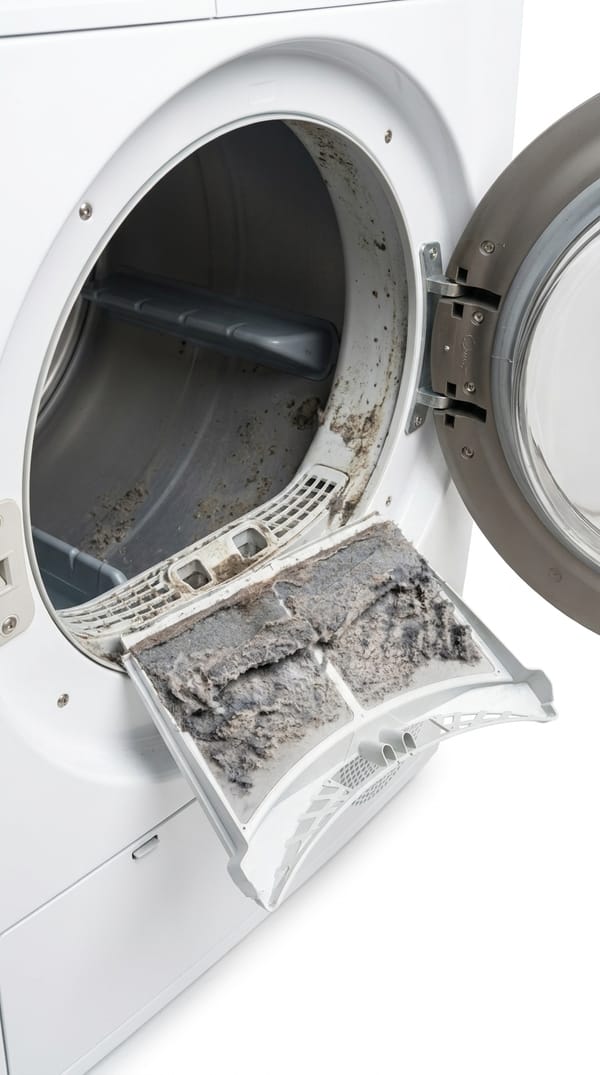
The lint filter is your first line of defense for good airflow. Remove it after every load and clean off all lint. For a deeper clean, wash it with warm, soapy water to remove any residue from fabric softener sheets, and ensure it's completely dry before reinserting.
Next, inspect the dryer vent hose. If it's flexible, check for any sharp bends or kinks that restrict airflow. For rigid vents, ensure connections are secure. If you suspect a significant clog, you can try gently detaching the hose from the back of the dryer (after unplugging it!) and visually inspecting for blockages. You can also check the vent outlet on the exterior of your home for lint buildup or obstructions like bird nests.
For dryers that have power but won't start, try resetting the appliance. Unplug the dryer from the wall outlet, wait for at least 5 minutes, then plug it back in. This can sometimes clear temporary electronic glitches.
3. Watch for Signs the Problem Is More Serious
If you've completed the basic checks and your dryer is still not working, it's time to consider if the issue requires professional attention. Pay attention to any unusual noises, such as grinding, squealing, or loud thumping. These can indicate internal mechanical problems like a worn-out motor or a broken drum bearing.
If the dryer runs but doesn't heat, and you've confirmed the lint filter and vent are clear, the heating element or igniter (for gas dryers) might be faulty. For gas dryers, also ensure the gas supply valve is open and that other gas appliances in your home are working.
Any situation involving sparks, smoke, or a burning smell means you should immediately unplug the dryer and stop using it. These are serious safety hazards, and attempting to fix them yourself could be dangerous. It's time to call a qualified appliance repair technician.
What Not to Do
- Do not ignore a persistent lack of heat or tumbling. These are often indicators of internal component failure that won't resolve on their own.
- Avoid using excessive force when cleaning or inspecting components. Many dryer parts are delicate and can be easily damaged.
- Do not attempt to repair internal electrical components, heating elements, gas lines, or motor issues yourself unless you have specific training and safety equipment. This can lead to electrical shock, fire, or gas leaks.
- Never operate a dryer with a damaged or missing lint filter, or with a severely blocked vent, as this poses a significant fire risk.
Safety and Editorial Note
This guide focuses on the most common and safe troubleshooting steps homeowners can perform when their dryer is not working. We prioritize identifying issues related to power, airflow, and user settings that can be addressed with basic maintenance and checks.
Our approach emphasizes practical symptoms and manufacturer-style safety limits. We do not provide instructions for disassembling complex internal components, working with gas lines, or repairing electrical systems, as these tasks require specialized knowledge and tools. For any issue beyond simple cleaning and resets, we strongly recommend consulting a qualified appliance repair professional to ensure safety and proper repair.
Should You Repair, Replace, or Upgrade?
Deciding whether to repair your dryer or replace it depends on several factors. If your dryer is relatively new (under 5-7 years) and the repair involves a single, inexpensive part like a door switch or belt, repair is often the most cost-effective option. However, if the dryer is older, or if it requires multiple repairs or a major component replacement (like a motor or control board), the cost of repair can quickly approach the price of a new unit.
Consider the recurring nature of the problem. If you've had multiple issues with the same dryer, it might be a sign of declining reliability, and investing in a new, more energy-efficient model could be wiser. Newer dryers often offer better performance, lower energy consumption, and updated features that could enhance your laundry routine.
Also, factor in the cost of energy. Older dryers can be significantly less efficient than modern ones. If your current dryer is costing you a lot in electricity or gas bills, a new model might offer long-term savings that offset the initial purchase price. Ultimately, balance the immediate repair cost against the potential long-term savings and convenience of a new appliance.
How to Prevent This Problem Next Time
- Clean the lint filter after every single use.
- Perform a deeper vent cleaning (including the hose and exterior vent) at least once or twice a year, more often if you do large loads or have pets.
- Regularly inspect the dryer vent hose for kinks or damage and replace it if it's old, cracked, or excessively flexible.
- Ensure the dryer is installed with adequate space around it for proper ventilation.
- Check the external dryer vent hood periodically to ensure it opens freely and isn't blocked by debris or snow.
- If your dryer is gas-powered, have the gas line and connections checked periodically by a professional.
Related Buying Advice
If you're considering replacing your dryer due to recurring issues, look for models with robust build quality and good user reviews regarding durability. Features like advanced moisture sensing technology can help prevent over-drying and improve energy efficiency. For those with large households or frequent laundry needs, consider high-capacity models. If energy savings are a priority, explore ENERGY STAR certified models or those with heat pump technology, which are significantly more efficient than traditional electric or gas dryers.
Frequently Asked Questions
Why is my dryer not working even though it has power?
If your dryer has power (the light comes on) but won't start, the issue could be a faulty door switch, a problem with the start button, a blown thermal fuse, or a broken drive belt. Ensure the door is fully closed and try a power reset by unplugging it for a few minutes. If these don't help, it likely requires internal component inspection by a professional.
Why is my dryer not working but the light is on?
This typically indicates a problem beyond the main power supply. Common causes include a malfunctioning door switch (preventing the dryer from sensing the door is closed), a failed start switch, a broken drive belt that prevents the drum from turning, or a problem with the motor or control board. Always check the door latch first.
Why is my dryer not working when I push the start button?
If you push the start button and nothing happens, it could be a faulty start switch, a blown thermal fuse, or an issue with the main control board. Ensure you're pressing the button firmly and that the dryer door is securely latched. A tripped circuit breaker or a completely blocked vent can also prevent the dryer from engaging, even if it has power.
Why is my dryer not working all of a sudden?
A dryer stopping suddenly often points to an electrical issue like a tripped circuit breaker or a blown thermal fuse, which is a safety device that cuts power if the dryer overheats. It could also be a mechanical failure, such as a broken drive belt. Check your breaker box and ensure the lint filter and vent are clear before considering internal mechanical or electrical faults.
Why is my dryer not working after a power outage?
After a power outage, the first thing to check is your home's circuit breaker panel. The outage may have tripped the breaker for your dryer. Reset it if it's tripped. If the breaker isn't tripped and the dryer still won't work, it might have sustained an electrical surge damage, or there could be an unrelated issue that coincidentally appeared. Try unplugging the dryer for five minutes to reset its internal electronics.